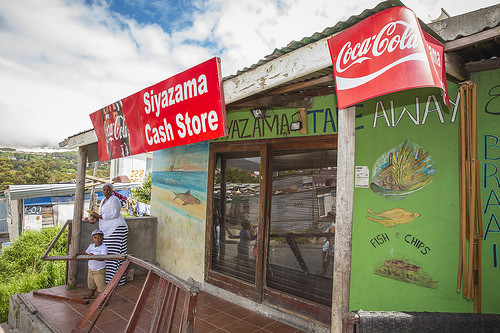
A Cape Town False Bay tagged image from photographer – manhhai as published on Flickr.
Viêt Nam – Histoire Arts Archéologie – FRONT COVER – Bìa trước, bản tiếng Pháp

Image by manhhai
Viêt Nam: histoire arts archéologie
Anne-Valérie Schweyer, Paisarn Piemmettawat
Editions Olizane, 2011 – 426 trang
L’histoire du Viêt Nam a été façonnée par la confrontation spectaculaire – tant culturelle qu’idéologique – du monde chinois, représenté par les Viêt vivant dans le bassin du fleuve Rouge, et du monde indien qui a marqué les nombreux petits royaumes cam le long de la côte, depuis environ 200 km au nord de Huê à la région de Phan Thiêt au sud. Divisé en quatre parties, cet ouvrage présente d’abord le Viêt Nam sous l’angle de son histoire et de sa géographie. Puis les civilisations cam et viêt sont abordées dans leurs aspects religieux et culturel respectifs. Suit la description détaillée de plus de soixante sites archéologiques qui ont conservé toute leur grandeur et leur raffinement. Le texte fait revivre chaque lieu en replaçant, dans leur contexte d’origine, les objets dispersés dans différents lieux d’exposition. Les principaux musées du Viêt Nam font par ailleurs l’objet d’une présentation exhaustive dans le dernier chapitre. Cet ouvrage peut être consulté tant comme un guide de voyage pratique, grâce à la localisation précise des sites, indispensable pour une visite sur place, que comme un livre d’histoire dont le récit est une brillante synthèse des recherches historiques et archéologiques actuelles. L’ensemble est richement illustré par des photographies en couleurs et des documents anciens, ainsi que de nombreux plans et cartes.
books.google.com.vn/books?id=mSrsUuIxZXkC&printsec=fr…
The history of Vietnam is one of spectacular confrontations, both cultural and ideological between the world of the Chinese – a world adopted by the ethnic Viet living in the Red river basin – and the Indian world – facets of which are seen in the Cham, whose numerous small kingdoms were strung out all along the coast from north of Hue to south of Phan Rang. This book will firstly present the history of Vietnam from the 6th to 15th centuries, highlighting the clashes between the two major civilisations which are the foundation of modern Vietnam. The second part will deal with the archaeology of the sites which are a testament to this history. Maps, plans and numerous photographs will help us to experience the history of ancient Vietnam both in its early beginnings and its subsequent evolution. Traces the history of Vietnam from its early beginnings to the emergence of the Cham civilisation and beyond Explores numerous archaeological sites and monuments In-depth research by a world renowned scholar Includes maps and plans of important archaeological and historical sites 300 colour photographs
———————-
Việt Nam cổ đại : Lịch sử, Nghệ thuật và Khảo cổ học
Anne-Valérie Schweyer
River Books , 2011 – Lịch sử – 428 trang
Lịch sử Việt Nam là một trong những cuộc đối đầu ngoạn mục, cả về văn hóa và tư tưởng giữa thế giới của người Hoa – thế giới được tiếp nhận bởi người Việt sống ở lưu vực sông Hồng – và thế giới của người Ấn – những khía cạnh được nhìn thấy ở người Chăm, mà rất nhiều vương quốc nhỏ nằm dọc theo bờ biển từ bắc Huế đến nam Phan Rang. Cuốn sách này sẽ lần đầu tiên trình bày về lịch sử Việt Nam từ thế kỷ 6 đến thế kỷ 15, nêu bật những cuộc đụng độ giữa hai nền văn minh lớn là nền tảng của Việt Nam hiện đại. Phần thứ hai sẽ đề cập đến khảo cổ học của các địa điểm là minh chứng cho lịch sử này. Bản đồ, kế hoạch và vô số bức ảnh sẽ giúp chúng ta trải nghiệm lịch sử của Việt Nam cổ đại cả trong buổi sơ khai và quá trình phát triển sau này của nó.
————————
Book Review
The Early History of the Eastern Part of the Southeast Asian Mainland
March 4, 2012
Click here to submit your Cape Town News – free.
Have you tried: Reach Trust for Solar and Building Management?
Fun Western Cape Fact: Why are the houses in Bo-Kaap district painted in bright colours? The original residents of this area in Cape Town were descendants of slaves brought in from Africa and Asia and were Muslims. As part of their religion they celebrate Ramadan – the Islamic month of fasting. At the end of the holy month it is tradition to dress up in brightly coloured clothes and at the same time many of the residents then paint their houses. The reason for getting so many different colours is that the residents and neighbours discuss together what colours they are painting their houses to avoid colour clashes or two houses painted the same colour next to each other.
Watch a Video: