
JOHANNESBURG, 13 November 202011 September 2019: Just before 01:00 on the 14th of June 2017, a fire broke out in the kitchen of a fourth floor flat at Grenfell Tower, a 23 storey tower block in North Kensington, West London, in the United Kingdom. Within minutes, the fire had raced up the exterior of the building and then spread to all four sides. By 03:00, most of the upper floors were well alight. 72 people died. – In an inquiry heard last week, a fire safety expert said engineers had a “duty” to consider how disabled residents would have evacuated Grenfell Tower, an inquiry heard on last week. Dr Barbara Lane’s comments came in response to questions about a 2012 report from fire safety consultants Exova. The report, done before Grenfell’s refurbishment, was said to lack detail on how people with mobility issues could escape the building in an emergency. At least 22 disabled people lived above the 10th floor of the 24-storey building at the time of the fire. – In raising awareness for the rights of disabled people and encouraging the development of more accessible built environments for people with disabilities, let us not forget to prioritize their safety.

South Africa commemorates National Disability Rights Awareness month annually from the 3rd of November to the 3rd of December. The month long campaign carries weekly sub-themes which are reflected in the Medium Term Strategic Framework (2019-2024) of government. The following sub-themes are intended to focus conversations on priority areas identified by the disability sector, which also link to the seven priorities of government:
- Week 1: Children and young people with disabilities empowered to chart their own destiny through access to quality lifelong learning
- Week 2: A built environment accessible to all persons with disabilities
- Week 3: Persons with disabilities as equal players in building inclusive economies
- Week 4: Children and women with disabilities – feeling and being safe as equal citizens in their communities
In creating built environment that are accessible to persons with disabilities, Evac+Chair South Africa would like to encourage building owners and managers to prioritize having adequate emergency evacuation procedures and resources in place to assist the disabled and mobility impaired. The responsibility in multi storey buildings such as office blocks, hotels, apartment blocks, shopping centres etc. rests with the building owners/managers/body corporate or any other type of body which has the responsibility for the safety, maintenance of such buildings according to the OHS ACT, Labour ACT, THE PUBLIC SERVICE REASONABLE ACCOMMODATION HANDBOOK, and the NEW BUILDING REGULATIONS (SANS 10400).
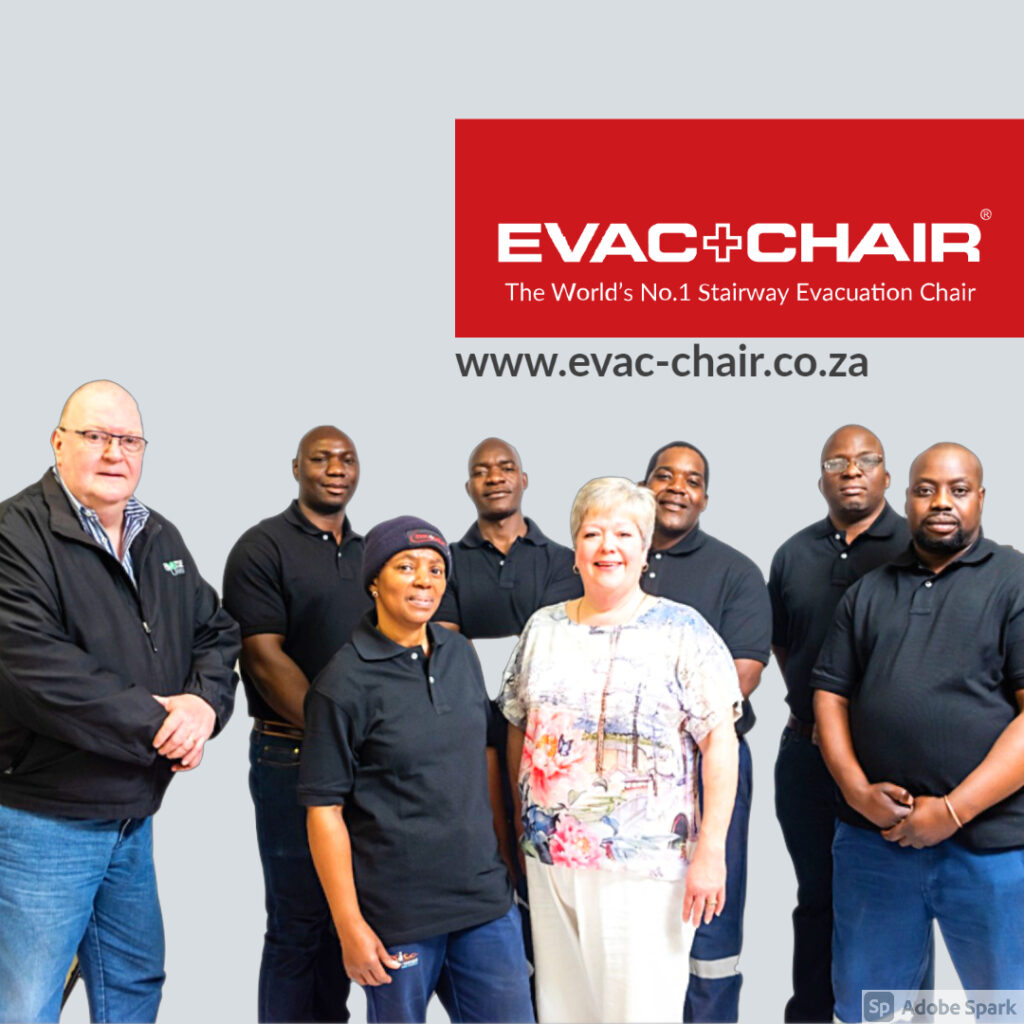
Evac+Chair – South Africa is the local manufacturer and distributor of World’s No.1 Stairway Evacuation Chair
Since 1982. The EVAC+CHAIR is designed to carry mobility impaired people down stairs in an emergency evacuation when the lifts are not working. The EVAC+CHAIR is portable – no installation or modification of stairways is required.
Gavin Glass, Evac+Chair – South Africa’s CEO said:
“Being disabled myself, makes me happy to know that we are making products that helps saves people’s lives. – I would like to encourage building owners and managers to plan and be adequately prepared for safe emergency evacuations so we can avoid devastating events such as the Grenfell Tower fire”
Video: Disability Rights Awareness Month – Encouraging Building Owners to Prioritize Emergency Evacuation Safety:
CLICK HERE to submit your press release to MyPR.co.za.
More Info on Disability Rights Awareness Month – Encouraging Building Owners to Prioritize Emergency Evacuation Safety here: https://evac-chair.co.za/
Twitter:
Facebook: https://www.facebook.com/evacchairsa


 Novelle drops a brand new soulful sound ‘Visage’