
Cape Town – A new diving beetle species has been discovered in a Noordhoek wetlands area of Cape Town and has been described as an evolutionary relic.
Dr David Bilton of Plymouth University, who lead the new species identification process, said: “Our study of DNA sequences shows that the closest relatives of Capelatus [Cape diving beetle] live thousands of miles away, and that they last shared a common ancestor around 30-40 million years ago”.
The Cape diving beetle is so different from any of the world’s other diving beetles that it has been placed in a new group all on its own, with its nearest relations to be found around the Mediterranean and in New Guinea.
“This beetle’s a real evolutionary relic, which only seems to have survived in a very small area close to Cape Town, probably because this region has had a relatively stable climate over the last few million years,” Bilton said in a Plymouth University statement.
Bilton’s team used a combination of morphological (or structural) and molecular (DNA) data to study the beetle. It was established as a highly distinctive, and apparently endangered member of the world fauna.
The beetle is between 8mm to 10mm in size. Its feet, wing cases, genitalia and size are so unique that it was put it into a category of its own, and, therefore, placed in its own genus.
Capelatus prykei was named after Stellenbosch University (SU) entomologist, Dr James Pryke, who collected it in dense vegetation in local wetlands in 2006 while he was doing research for his PhD on arthropod conservation.
“I certainly didn’t expect to have it name after me. I am very happy about that – it is quite an honour,” said Pryke, who lectures in landscape ecology, conservation management and meta-population dynamics in the SU Department of Conservation Ecology and Entomology.
He was informed about the honour a month ago by Bilton, who led the new species identification process. The news was published in the journal Systematic Entomology.
Although it carries his name, Pryke was not the first to discover the beetle. Samples were already collected on the Cape Flats in 1954 and were kept in the Natural History Museum in London. All of those wetlands were drained for housing and then built up already in the 1960s.
After Pryke’s specimens were sent to Bilton for identification, the London samples were delved up again as part of endeavours to find out what they were.
Pryke’s samples were thoroughly investigated and found to be in fact a new species.
News24
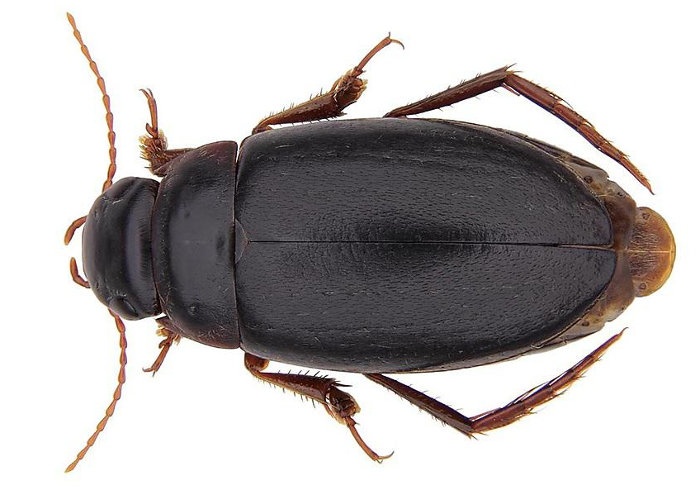
Dr Bilton first began sampling water beetles in the area as a result of annual field trips to South Africa by undergraduates on the BSc (Hons) in Marine Biology and Coastal Ecology, and has found dozens of new species in the area in the last five years. This study, written in conjunction with Plymouth entomologist Clive Turner and colleagues from the Museum of Zoology in Munich, really highlights the unique biological diversity of the region.
The Western Cape hosts one of the world’s hottest biodiversity hotspots, and supports around 20 per cent of the plant species found in the whole of sub-Saharan Africa – most of which are restricted to the region.
The region is also home to a significant number of endemic reptiles, amphibians, freshwater fishes and insects and some of these, like Capelatus, lack close living relatives outside the region, making it one of the most biologically unique places on the planet.
The current study suggests that among such isolated species, Capelatus prykei is particularly under threat and that, as such, immediate action should be taken by conservation agencies.

