
 Those soldiers will take cold comfort in knowing that the modern day iron has its roots in ancient history. Circa 400 B.C., Greeks would heat a round bar – known as a goffering iron – and use it to produce pleats on robes.
An iron consumes as much energy as ten 100 watt light bulbs. Several steps can be taken to increase ironing efficiency:
- Iron low temperature fabrics first to reduce warm up time.
- Iron large batches of clothing at one time to avoid wasting energy reheating the iron several times.
- Switch your iron off before you are finished and complete the ironing on stored energy.
- Prevent scorching and wasting energy by not over heating the iron.
- Use only distilled water in steam irons.
- Be sure to turn your iron off if you are interrupted whilst ironing.
- Use the permanent press feature on your washer and dryer if it is available.
- By removing clothing promptly from the dryer and folding them carefully, many items will require no ironing, or just a quick press.
Go further and save more with: Building Automation Systems / Solar PV Installations / Metering Solutions.
What modern consumers would identify as an iron first appeared in Europe in the 1300s. Called a flatiron it was simply a smooth piece of metal affixed to a handle. The iron would be heated over flames until sufficiently hot, at which time it would be picked up with an insulated glove. A layer of cloth would cover the article of clothing to prevent soot from the iron from staining the finished garment. Once the flatiron cooled, it would be reheated and the process repeated. Besides smoothing wrinkles, ironing served another important function, killing germs in clothing and reducing mildew.
Metal technology began developing in the 1800s, hastening the evolution of the smoothing iron. Flatirons could be heated atop cast iron stoves, making the job much easier and cleaner than fire. By 1870, wooden handles were used, preventing users from receiving burns, as wood is an insulator.
Gas irons were patented in the 1870s, making the devices even easier to use. A gas line would carry fuel to the appliance, which contained a burner to provide the heat.
The invention of the electric iron coincided with the widespread electrification of American homes in the 1880s. In 1882, Henry W. Seeley of New York City received a patent for the electric flatiron. His model had built-in coils and was heated on a rack. The problem was that it took a long time to heat and cooled rapidly once in use.
Perhaps the biggest breakthrough in smoothing-iron technology occurred early in the 20th century, when irons were made with electric cords. The development helped solve the centuries-old necessity of constantly reheating the iron. Improvements also were made to the sole plate (bottom) of the iron and by the 1920s, many irons came equipped with thermostats to control the level of heat.
In the mid-1920s, the Eldec Company unveiled the steam iron, which facilitated the pressing of dry material. Up to that point, users had to sprinkle water on the fabric. The steam irons funneled water vapor from a receptacle to small holes on the sole plate.
Other improvements in the following decades included the development of an aluminum sole plate that would not rust. In the 1950s, irons capable of both wet and dry operation were introduced, and in 1995, most sole plates had nonstick coating.
Improvements on the sole plate have resulted in more efficient and energy savings. Improved coatings make it less susceptible to scratches from zippers or buttons on garments.
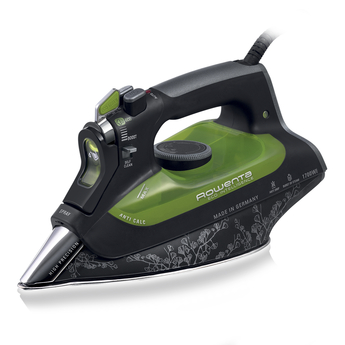
In 2012 Rowenta announced the Eco Intelligence Iron with a new patented Microsteam400 3De soleplate (Patent US no. 7,305,780). Apparently the soleplate is the crux of the energy-efficient design – helping to concentrate steam on the fabric, reducing loss of steam and therefore saving on water usage. The iron is claimed to reduce energy usage by 25%. At a price of around $170.00 (shipping and taxes included) one would have to iron a lot of clothes to justify the price, though.

Video: Quick Tip: The Most Enerrgy Efficient Iron
[embedded content]
More Info on Quick Tip: The Most Enerrgy Efficient Iron here: https://straton.co.za/electricity-saving-tip-iron/
Twitter: https://twitter.com/MyPE
Facebook: https://www.facebook.com/StratonElectrical/
CLICK HERE to submit your press release to MyPR.co.za.


