

As public relations practitioners, it was our duty to understand the industry’s evolution. We wanted to better understand communication’s core aim and how it was used to exchange information, inform, meet social expectations, and influence. This article explores this theory and looks at how different organizations around the world used this powerful tool to convey a message to the public.
Public Relations is an activity that concerns itself with the relationship between an enterprise and the public which it serves, and on which it is dependent. Good public relations depends not only on words but also on actions deserving of public support and educating the public to acquaint themselves with such actions. Public relations dates way back to the ancient times of Greece when it was used by government and corporations to inform stakeholders, and when it evolved through technology with media and social media for two-way communication and transparency.
Public Relations roots come from those who led and their followers, the public. In ancient times kings proclaimed their importance in gaining worship obedience from their subjects. Through the erection of statues and other monuments, in Greece, the individual was at the forefront of swaying public opinion as leaders. Sculptures, paintings, and oratory became tools to affect the attitudes and actions of the public. In essence, the literature of the Greeks highlighted how people praised their leaders and were loyal to their rulers. The Greeks laid the foundation of modern publicity.
The Catholic Church’s Written Word

The Catholic Church began to appreciate the value of the written word as a way to set the patterns of thought of its followers. This led to realizing the importance of public opinion and the role of propaganda which was evident in books containing sermons, dialogue, and letters. At the closing of the medieval period, there was a rise in cities, and the invention of printing led to mass publicity. Special groups assumed the function of the supplying of this information. In the Renaissance period, there was a new respect for reason and the right of humans to investigate nature and society independently.
The collective voice of the people had created awareness of the importance of good relations with the public. The church was in opposition to this reform and launched a counter-reformation which is what led to ‘’propaganda’’. This was first introduced by Pope Gregory XIII (1572-85) when he established the Society for the Propagation of the Faith. In 1650, Pope Urban VIII (1623-1644) instituted the Sacred Congregation for the Propagation of the Faith to spread Catholicism worldwide.
The French Revolution brought mostly religious worship of public opinion, which was thought to resolve the social and political problems at the time while providing a foundation for greater awareness of the use of communication media as a tool to shape attitudes. Napoleon later used propaganda to build and tear down the morale of the people, becoming not only a military leader but a good persuader. He censored gazettes through propaganda to build the public’s awareness of him and increase the political adherence of the people he interacted with.
The Evolution of American Propaganda
In the settlement of America, different groups used propaganda to attract colonists and money to the continent. The significant use of it in the struggle for independence from British rule was by Samuel Adams who was known as the press agent for the revolution. He organized committees and wrote inflammatory propaganda published by newspapers in favor of colonists. Amos Kendall helped reshape then President Andrew Jackson’s public image which signified the start of personal branding. In the mid-1800s, as PR developed, Phineas Tylor Barnum a publicity showman created a circus and promoted it using publicity stunts attracting editors and reporters which was successful in attracting millions.
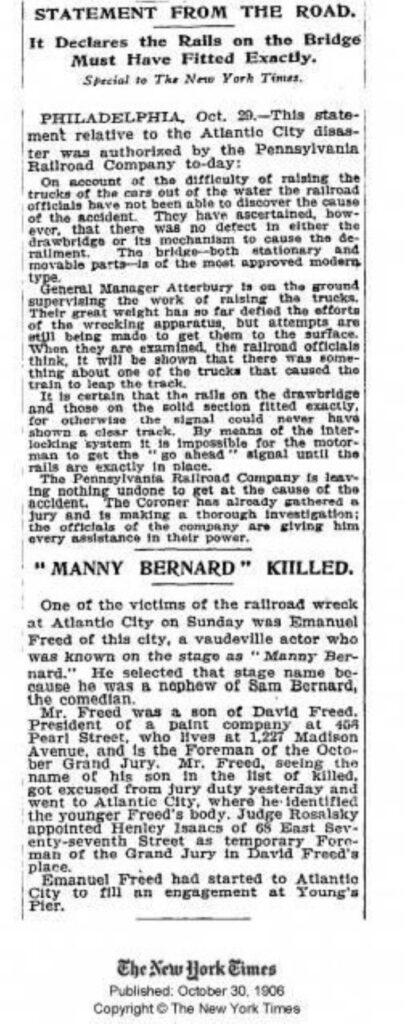
Ivy Ledbetter Lee had changed PR forever. One of the industry’s founding fathers, Lee was hired by John D. Rockefeller in 1903 to advise the family. In his “Declaration of Principles,” he stated that the public should receive accurate, and timely information on a company’s actions. In 1906, Ivy Ledbetter Lee also wrote the first press release ever, responding to a major railway crash in Atlantic City. The press release was written on behalf of Pennsylvania Railroad to ensure that the company’s reputation would not take a hit and was published by The New York Times. It was during the great depression that PR departments were created, the very first being the National Association of Manufacturers. Managing campaigns ranging from movie trailers to leaflets, and its U.S. manufacturing sector. After World War II The U.S. created Office of War Information informing the public about their war efforts.
In 1923, Edward L. Bernays presented the “two-way-street” concept between a company and the public in his book, “Crystallizing Public Opinion.” Before Bernays, many believed that PR deceived the public, but he emphasized the importance of accountability and transparency, tearing down much of the wall between companies and everyday Americans.
The Origin of PR in Africa

In ancient Egypt, pharaohs proclaimed their achievements using word pictures on monuments. Chiefs had spokespeople who had roles similar to PR practitioners and all interactions and communication with the chief went through their spokesperson. This tradition still exists in areas in Africa. PR continued to develop during colonial times to address key issues from public information, nationalization, and emerging of political parties and problems faced by commercial organizations. During the 1980’s the Public Relations profession adapted and became a press agency in organizations for media relations, increasing transparency and accountability.
It has become a tool used by governments around the world to address economic issues, political issues, and social issues. Through correspondence with the International PR Association in 2001 registered the following African countries the Society of Kenya, the Nigerian Institute of PR, the PR Institute of Southern Africa, the Swaziland PR Association, the Zimbabwe Institute of PR, the Arab PR Society, the Institute of PR in Ghana, the PR Association of Uganda and the Cameroon PR Association.
The South African PR practice established PRISA, which obtained the International Standard Organisation’s certification. Which allowed PRISA to have a consultancy chapter and register consultancies to this chapter. PR in the 21st century has capitalized on opportunities and has faced challenges. The practice continues to grow into various fields in media and communication while moving into philanthropy through corporate social responsibility.
The history of Public Relations is lengthy and has taken different forms over the years. It has evolved from communication from kings’ spokesperson to their subjects, sculptures, and monuments, to propaganda used by church and leaders to influencer followers. Newspapers covering the latest news across the world informing the public. Shaping public opinion to influence the struggle for independence and shaping the public image. To the very first press release every written, corporate communication for government to address issues that affect the public. Becoming a source of news creation, social media engagement, and analysis. Public Relations is an important tool for transparency and accountability towards the intended audience and new audiences.
References:
”Crystallizing Public Opinion” book, 1923 by Edward L. Bernays
Marshall Communication: https://marshallpr.com/an-overview-the-history-of-public-relations/
The Practice of Public Relations in Africa: https://repository.up.ac.za/bitstream/handle/2263/28138/05chapter5.pdf?sequence=6
Read other work by Baphiwe Yoyo here.
Video: The History of Public Relations Boilerplate and Editor’s Notes.
More Info on The History of Public Relations here:
Twitter: https://twitter.com/youknowwho_tw
Facebook: https://www.facebook.com/yoyostorm.baphiwe CLICK HERE to submit your press release to MyPR.co.za.


